Jürgen Rüland
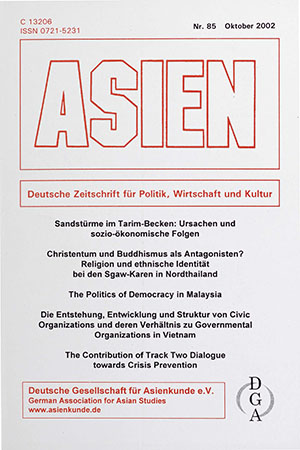 Nr. 85 (2002)
 Artikel Article 84–96 {:en}The Contribution of Track Two Dialogue towards Crisis PreventionThe emergence of many think tanks and security-related track two processes in the Asia-Pacific during the last two decades has given rise to speculation about their contribution to the peaceful resolution of disputes and the search for strategies to address the manyfold nontraditional security threats caused by globalization and growing interdependencies. After placing track two …von by Jürgen Rüland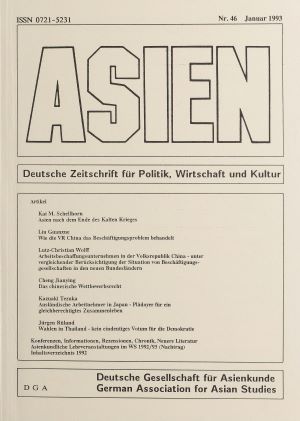 Nr. 46 (1993)
 Artikel Article 60–66 {:de}Wahlen in Thailand – kein eindeutiges Votum für die DemokratieOn 13 September 1992, Thailand’s electorate went to the polls for the second time within six months to elect a new parliament. The new elections were to take the kingdom out of its political turmoil since last May. At that time the military had opened fire on unarmed demonstrators who were demanding the resignation of …von by Jürgen Rüland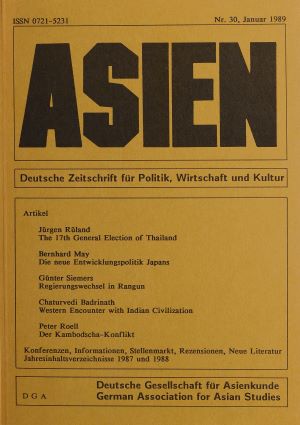 Nr. 30 (1989)
 Artikel Article 1–37 {:en}The 17th General Election of ThailandThe article analyses the 17th general election of Thailand by focusing on four major aspects: first it investigates the factors that led to the dissolution of parliament, secondly it reviews the election campaign, thirdly, it presents and interprets the election results, and compares them to earlier ones, finally, an attempt is made to assess the …von by Jürgen Rüland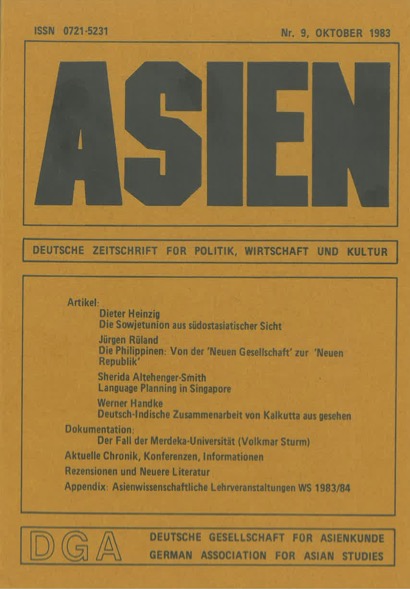 Nr. 9 (1983)
 Artikel Article 25–45 {:de}Die Philippinen: Von der „Neuen Gesellschaft“ zur „Neuen Republik“Die Beendigung des Ausnahmezustands am 17.1.1981 durch Präsident Marcos war eine Maßnahme zur Festigung seiner Herrschaft ohne substantielle Liberalisierungen im politischen Willensbildungsprozeß. Die Zusammensetzung der zahlenmäßig kleinen Herrschaftselite. Die ungelöste Nachfolgefrage. Schlüsselstellung des Militärs bei der Nachfolge des Präsidenten. Die Schwäche der bürgerlichen Opposition. Polarisierung und Radikalisierung philippinischer Politik nach der Ermordung von Benigno Aquino.von by Jürgen Rüland