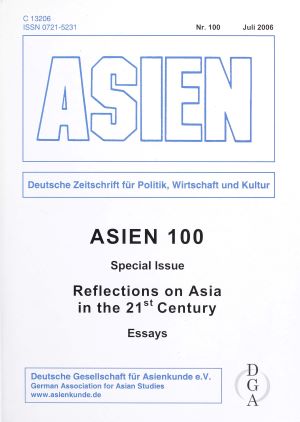
How „Asian“ will Asia be in the 21st Century?Henrik Schmiegelow
ASIEN – Nr. 100 (2006) pp. 54–61
It does not require much imagination to predict that the geographical unit conventionally called „Asia“ will aggregate the highest combined gross national products, international trade and investment figures, foreign currency reserves and a number of other economic records in the 21st century. Just look at the recent growth rates of the two most populous nations of the world, China and India. Consider the standard factors of labour, land and capital of just these two countries in the most elementary economic equations. Assume traditional saving and investment propensities of „Confucian“ sectors of Asian societies feeding „Anglo-Saxon“ consumption patterns among newly affluent Chinese and Indian middle classes. Remember Japan’s experience of 10% growth rates in the catch-up phase of the 1960’s as well as its technology driven supply push, which conquered world markets in the 1970’s and 1980’s and does so, again, today. Put all that together and Asia’s rise seems inexorable…